
Website vs Facebook page: what Welsh businesses need.
A Facebook page is rented ground. Here is what a proper website does for a Welsh business that social media cannot, and when you genuinely need both.
Does a Welsh business with a busy Facebook page still need a website? Honest answer: if you are forced to pick one, pick the website, because it is the only one of the two you actually own. But the real strategy for a salon in Neath or a builder in Bridgend is not either-or; it is understanding which jobs each does well, because they are different tools that the algorithm-chasing advice industry keeps pretending are rivals. Here is the plain-spoken breakdown we give clients who arrive with a thriving page and an empty search presence.
What a Facebook page genuinely does well
Credit where due, because the page is not the enemy. Facebook is excellent at keeping your existing audience warm: the regulars who already like your page see your specials, your finished jobs, your bank-holiday hours. It is the natural home for community: local groups, event chatter, the recommendations thread where someone asks "anyone know a good tiler?" and three neighbours tag you. It costs nothing, posting takes seconds from your phone, and messages arrive where you already are. For trades and shops whose work photographs well, it is a living portfolio that friends share.
If your entire business comes from repeat customers and word of mouth, a well-run page genuinely covers a lot of ground. The problems start the day you want customers who have never heard of you.
Where the page quietly fails you
Type "electrician Bridgend" or "dog groomer Carmarthen" into Google, the way every new customer starts, and count the Facebook pages in the results. There are almost none, and that is the whole story in one search: Facebook content essentially does not compete in Google, and Google is where people go when they need something rather than when they are scrolling. Your page can have a thousand likes and be invisible at the exact moment someone nearby is ready to spend.
Reach inside Facebook has its own problem: the algorithm decides who sees each post, and organic reach has been squeezed for years so that pages increasingly pay to reach their own followers. And the deeper issue sits underneath both: the page, the followers and the message history all live on rented ground. Accounts get restricted and suspended by automated systems every day, often with no human to appeal to, and businesses built entirely on a page have watched years of work vanish over a disputed photo. None of that is scaremongering; it is the terms of service.
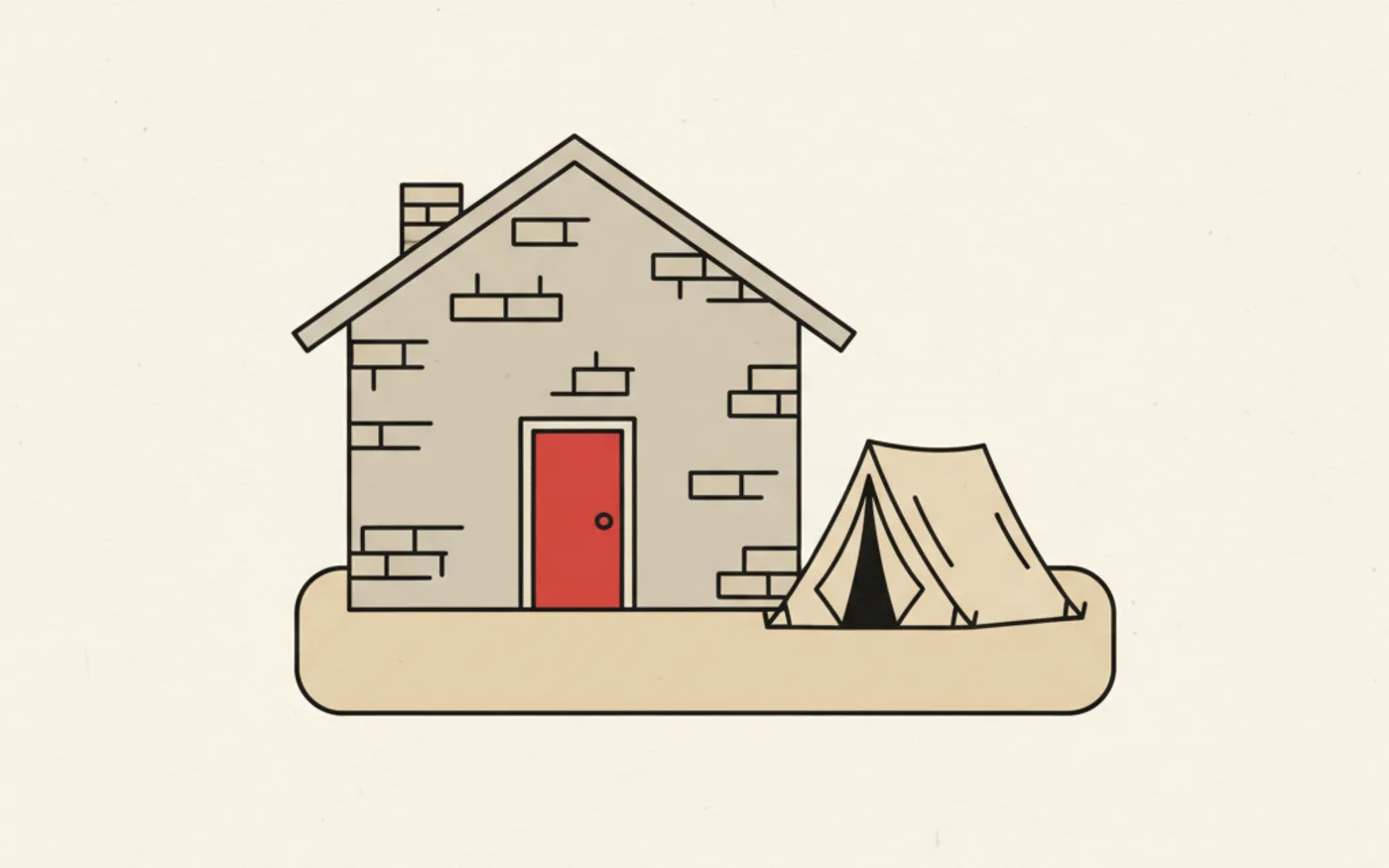
A Facebook page is a market stall in someone else's market. A website is your own shop, on your own street, with your name above the door.
The ownership test
Run every part of your online presence through one question: if this platform changed its rules tomorrow, what would I keep? Your website passes cleanly, done properly: the domain is yours, the content is yours, and the Google rankings your pages earn compound year after year like a savings account. With us that ownership is written into the terms, and it is why we bang on about it in our guide to affordable web design in Wales. Your Facebook page fails the test completely, and so does Instagram, and so will whatever platform arrives next. Rented ground is fine to trade on; it is a poor place to build the foundations.
If the search-invisibility problem is the one biting you, that is exactly what our web design service exists to fix: a fast, custom-coded site built to win the town-and-trade searches your page cannot reach, from £675 +VAT with the prices published.
What the searches actually look like
We watch this from the data side every week. The searches that reach our clients' sites, and our own, are overwhelmingly need-shaped and place-shaped: a service plus a town, typed by someone who intends to buy. Those searches resolve into the Google map pack and the organic results underneath it, which means the businesses competing for them are the ones with a complete Google Business Profile and a website that names its services and areas properly. A Facebook page simply is not on that battlefield. The customers you already have live on your page; the customers you have not met yet live in the search box.
How the website and the page divide the work
| The job | Website | Facebook page |
|---|---|---|
| Being found by strangers on Google | Built for it | Effectively invisible |
| Keeping regulars engaged | Passive | Excellent |
| Owning your content and audience | Yours outright | Rented |
| Taking bookings, quotes and payments | Purpose-built | Clunky at best |
| Looking credible to a first-time visitor | Your best suit | Depends on your last post |
| Cost | Built once, plan from £39 a month | Free, plus your time |
Read the table as a rota rather than a scoreboard: the website wins trust and strangers, the page keeps the community warm, and each covers the other's blind spot. The third leg of the stool is your Google Business Profile, which is free, sits directly in the map results, and feeds the website its readiest-to-buy visitors; our guide to getting your business on Google Maps covers claiming and finishing it properly.
The weekly loop that makes both work
The practical routine is lighter than most owners fear. The website holds the permanent truth: services, areas, prices, reviews, galleries, and it mostly just needs that truth kept current. The page carries the perishable stuff: this week's jobs, offers, closures, the photo that took thirty seconds and earns twelve comments. Post socially as often as feels natural, let the page link back to the site for booking and quoting, and let the site do the silent night shift of catching search traffic while you sleep. Businesses that wire the two together this way stop asking which one matters; the enquiries answer it for them.
A website only beats a Facebook page if it is found, which is where our SEO and performance service comes in: the town and service pages that rank are the whole reason to own the site rather than rent the feed.
The bottom line
Keep the page; it is good at what it is good at. But build the foundation you own: a website that wins the "trade plus town" searches your future customers are typing today, with your Google profile feeding it from the map. If your business currently exists only on Facebook, that is the gap costing you the customers you never got to meet, and closing it starts at £675 +VAT with published prices, no obligation, and a straight answer about what your situation actually needs.
Rather have this handled?
Everything in this guide is what we do all day for Welsh businesses: custom-coded sites, local SEO and a listing that stays busy.
Frequently asked questions.
Only if all your work comes from repeat customers and word of mouth. The moment you want customers who have never heard of you, you need to compete in Google, where searches are trade-plus-town and Facebook pages barely appear.
Facebook content essentially does not compete in Google's results for local service searches. The results that win those searches are the map pack and websites that name their services and areas properly.
Yes. Pages and accounts are restricted or suspended by automated systems every day, often without a human appeal route. The page, its followers and its message history all sit on rented ground governed by terms of service you do not control.
Yes. They do different jobs: the page keeps your existing audience warm with perishable updates, while the website holds the permanent truth and wins search traffic. Wire the page to link back to the site for bookings and quotes.
WebDev Wales
WebDev Wales · 1 August 2026
No obligation, replies within 24 hours
Rather have it handled for you.
Reading about local SEO is free. So is the quote for having every bit of it done properly, every month.